Wildfire seasons are running longer, and wind events feel sharper in both rural and urban settings. Yet not all tree work is the same, and not every property faces the same risks. The smartest plans blend FireSmart principles with arboricultural judgment, matching species, structure, and human use. I have walked hundreds of lots from five-acre rural homesteads to narrow city laneways. The best outcomes come when owners treat trees as living infrastructure and fire as a predictable, manageable hazard rather than a surprise.
What FireSmart really means for trees
FireSmart is less a product and more a discipline. You reduce the chance an ember starts a blaze, slow the spread if it does, and give firefighters safe access. Trees can be allies or liabilities depending on species, spacing, structure, and maintenance. The goal is to interrupt fuel continuity on the ground, up the trunk, and through the canopy.
In practice, this involves creating clear vertical and horizontal separation, pruning lower limbs to lift canopies, eliminating fine fuels near structures, and making careful choices about which trees stay and which go. None of this needs to leave a moonscape. Done well, FireSmart Tree Services retain shade, habitat, and aesthetics while lowering a home’s ignition risk.
Rural versus urban risks, seen from ground level
Rural properties often have continuous fuels: grass that cures in July, stacked firewood near siding, conifer windbreaks that stitch crowns together. An ember shower can arrive from a kilometer away and find dozens of easy starts. Wind-driven grass fires move at walking speed, sometimes faster on slopes. I have watched flames run through knee-high fescue straight into unpruned junipers at the driveway, then leap to eaves.
Urban properties face a different pattern. The threat may arrive as sparks from a nearby alley bin fire, fireworks, or a shed that goes up. Radiant heat from a neighbor’s fence fire matters more than a wall of flame. Space is tighter, trees overhang roofs, and utilities crisscross the canopy. A FireSmart plan here focuses on rooflines, fences, siding, and the 0 to 1.5 meter zone around structures.
Both settings need the same professional tools, but the levers differ. Rural work leans on spacing and ladder fuel reduction across a larger footprint. Urban work leans on precise Tree Pruning & Crown Shaping, judicious Tree Removal Services for problem species, and close coordination with utilities.
The zero to five meter rule that decides most outcomes
Fire behavior pays closest attention to the space immediately around your home and outbuildings. If I had to put one number above the rest, it is five meters. Keep that ring clean and noncombustible. Mulch with rock, not bark. Favor herbaceous plants with high moisture content. Keep firewood and lumber stacks outside that zone by at least ten meters in rural settings, or in a closed shed in urban yards.
Trees inside five meters demand scrutiny. Deciduous species, properly pruned and irrigated, can sometimes stay. Resin-rich conifers like spruce and cedar near siding are poor candidates for compromise. If they remain, I insist on aggressive canopy lifting and spacing from eaves, and I schedule a mid-summer moisture check. The line between charming and dangerous can be as simple as two dry lower limbs brushing shingles.
How professional arborists translate FireSmart into fieldwork
Certified arborists use the same science-based framework whether they are addressing wildfire risk or structural stability. The difference comes in priorities and timing. Here are the services that matter most when you want both safety and a healthy urban forest.
Certified Arborist Consultation
A good consultation is part science, part listening. I start with your goals, then walk the site with a clinometer, diameter tape, and often a resistograph or sonic tomograph if I suspect internal decay. We map critical zones around buildings and along evacuation routes. I probe soil in at least three spots for compaction and root flare depth. Then we build a plan that sequences work in logical packages over one to three years to keep budgets reasonable and tree stress low.
During a FireSmart review, I evaluate crown density, ladder fuels, proximity to vents and eaves, and whether species are prone to embers igniting needles or leaf litter. I also flag any utilities or access constraints so machinery does not create new risks.
Tree Pruning & Crown Shaping
Crown shaping does more than tidy a silhouette. It alters how wind and heat move through the canopy. Proper structural pruning removes weakly attached branches and co-dominant stems that love to fail under load. In a FireSmart context, I target:
- Vertical separation by lifting lower limbs to about two to three meters above grade for small trees, and three to four meters for larger trees, while respecting species tolerance. Canopy thinning to break up dense outer layers by no more than 15 to 20 percent in a season so the tree does not respond with epicormic sprouts.
In rural belts of conifers, I create spacing between crowns. Even a meter of air between adjacent crowns can slow crown fire transmission. In dense urban yards, I prune away from chimneys, soffits, and power service drops, sometimes coordinating with the utility’s line-clearance crew.
Dangerous Tree Assessment and Removal
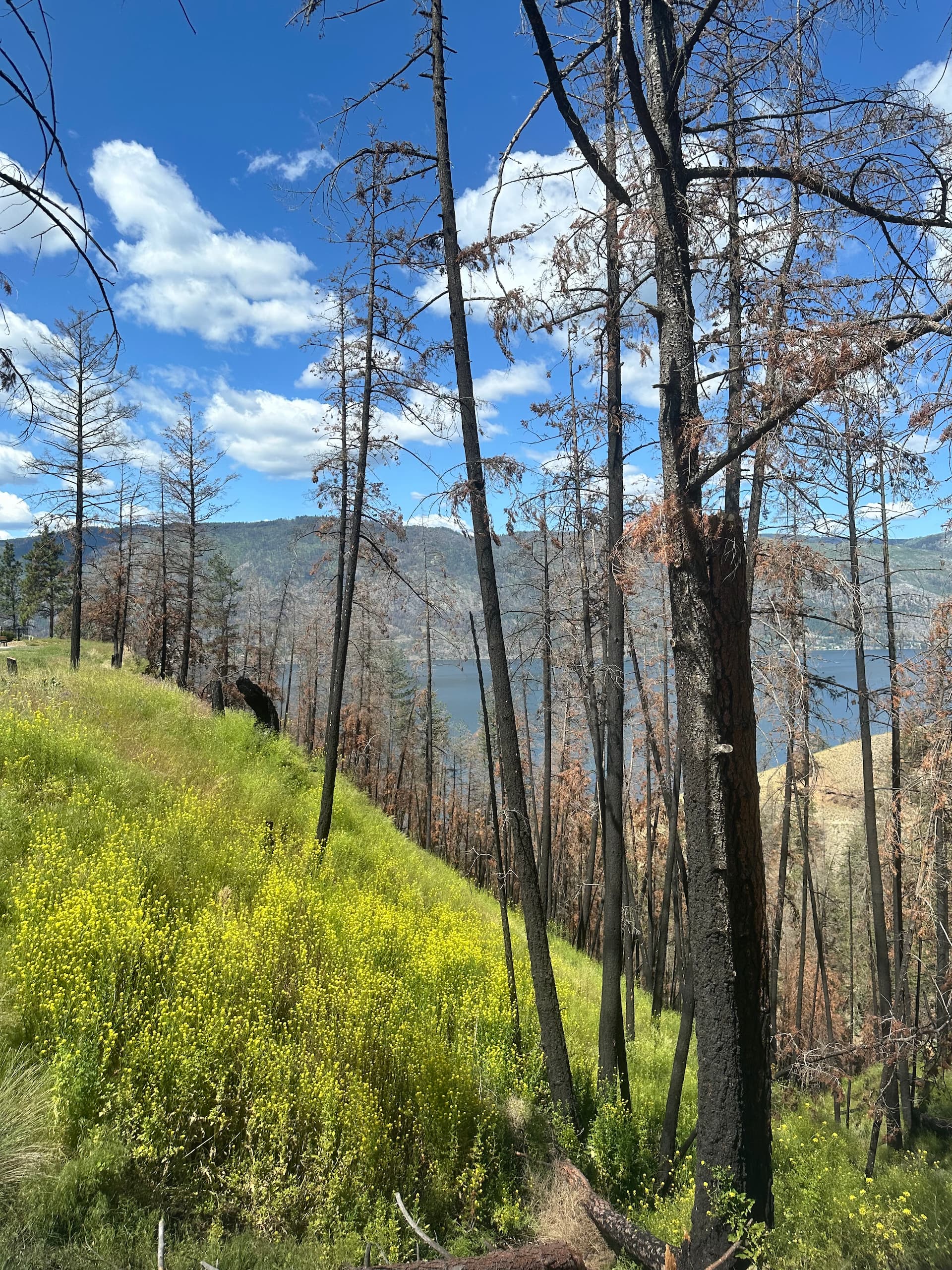
Some trees cross the line from manageable to unacceptable risk. Indicators include active lean with soil heaving, advanced basal decay, fruiting bodies of decay fungi, severe bark inclusion at co-dominants, and recurrent large deadwood over targets. In wildfire-prone zones, trees with chronic needle or leaf litter accumulation in gutters multiply ignition points, especially when combined with pitch pockets in conifers.
Dangerous Tree Assessment and Removal is not guesswork. I document defects, estimate likelihood of failure, and weigh consequences based on target occupancy. If removal is the call, we plan rigging and felling that protects structures and soil. In rural work I often use directional felling to lay stems as future wildlife habitat, placed away from structures, then limb and lop to lower fuel height. In the city, we segment the tree with ropes and friction devices to avoid shock loads and use ground protection mats to preserve lawns and root zones.
Stump Removal & Grinding
Stumps do more than trip ankles. In FireSmart planning they can wick fire under fences and into decks by smoldering through root systems. I grind stumps to 20 to 30 centimeters below grade for small trees, and deeper for species with aggressive suckering like aspen or poplar. Where roots threaten utilities, we hydro-excavate to expose lines before grinding. The grindings should not go back into the five meter zone, where they dry and burn readily. I either haul them or repurpose them well outside the home ignition zone.
Tree Cable and Bracing
Owners often ask whether they can save a mature tree with a split crotch or a developing crack. Sometimes yes. Tree Cable and Bracing can reduce movement in co-dominant stems and help a valued specimen ride out wind events. I install dynamic systems for healthy wood needing flexibility, or static bracing rods when a union is already compromised. Cables are not fireproofing, but they can keep a tree intact so it sheds fewer limbs during ember showers and does not open your roof to falling debris, which is a common secondary ignition source after wind fronts that accompany fires.
Emergency Tree Services
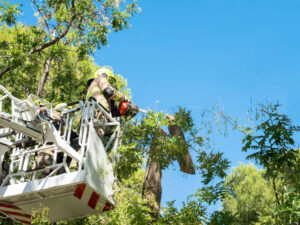
After a wind shift or a late summer lightning storm, calls arrive in clusters. Limbs in power lines, a stem through a garage roof, access routes blocked. Emergency Tree Services balance triage and safety. We stage saws with carbide chains for dirty wood, long throwlines, and battery saws for work near structures where exhaust is a hazard. Response times vary, but a prepared crew can mobilize in one to three hours for life safety, and within the day for property threats. In a fire context, we also clear driveways to at least four meters high and three meters wide so engines can pass without grazing branches, which is a problem more often than people think.
Tree Removal Services with FireSmart intent
Removal is not failure, it is strategy. In rural clusters of ladder fuels, we remove every second or third conifer to break up fuel continuity, focusing first on suppressed stems and those with poor form. In urban lots, I target resinous ornamentals beside vents, thin-barked species with decay at grade, and trees whose crowns overlap rooflines despite repeated pruning. Where shade is critical, I propose replacements with higher moisture foliage and slower litter build-up, located outside the five meter zone.
Species choices that help instead of hinder
No tree is fireproof, but some resist ignition better and recover from heat faster. In much of North America, deciduous species with broad, moist leaves fare better near homes. Maples, ashes, and some oaks, if pruned and irrigated, drop less persistent fine fuel than conifers. In coastal climates, arbutus and garry oak can be reasonable near structures if you manage leaf litter. In the prairies, green ash and hackberry have served well, though pests and disease pressures may influence choices.
Conifers have a place, particularly when spaced and limbed high. Pines with thick bark withstand heat better than thin-barked cedar. Junipers and arborvitae perform poorly near buildings because they accumulate dry, resinous litter along the trunk. In city alleys, those hedges behave like a fuse. I recommend relocating them or replacing with non-woody screens or deciduous hedges.
A simple home assessment you can do before calling an arborist
- Within 1.5 meters of your house, check for any combustible mulch, stacked lumber, or wooden planters. Look up for any branches within two meters of your roof or touching siding, vents, or chimneys. Scan the first two meters of each tree trunk for dead lower limbs or foliage that ladders fire from ground to canopy. Walk your driveway and gates, confirming at least a three meter clear width and a four meter clear height for emergency access. Note any trees with mushrooms at the base, oozing sap, or fresh cracks, especially if they lean toward structures or parking areas.
If you can answer yes to two or more of these, bring in a Certified Arborist Consultation with FireSmart experience. You will save time and avoid piecemeal fixes.
How much to prune, and when
Tree physiology sets the boundaries. A healthy tree can generally tolerate removal of 10 to 20 percent of its live crown in a single year. Exceed that and it may flush watersprouts or suffer sunscald. I schedule most structural pruning in late winter or early spring, when disease vectors are lower and the tree is ready to compartmentalize. Summer pruning works for conifers to reduce resin flow near high-risk periods, but I keep cuts small.
In rural belts, I often propose a three-year plan. Year one, address the five meter zone and lift conifer canopies. Year two, thin crowns to create spacing and remove suppressed stems. Year three, revisit problem spots and confirm that mowing, irrigation, and deck maintenance uphold the plan. In small urban lots, most work occurs in a single mobilization with a follow-up after one growing season.
Ground fuels matter as much as branches
Fire needs a path. Dry grasses, leaf litter, untreated wood fences, and old stumps provide it. In rural settings, mow grasses to under 10 centimeters during fire season, especially within 10 to 30 meters of structures. Rake litter away from trunks so embers cannot smolder into roots. Where wood fencing meets a house, consider a one to two meter section of noncombustible fencing to interrupt fire transmission. Replace landscape fabric and bark mulch near walls with gravel or pavers.
On steep slopes, embers roll downhill and lodge against logs and roots. I break up log lines and install small earthen breaks. Erosion control is part of the plan. Straw wattles can be a risk if left to dry near structures, so I use mineralized mulch or rock where feasible.
Real-world examples from the field
A rural client had a spruce row planted in the 1970s as a windbreak, crowns interlocked over a gravel drive leading to a workshop. They loved the privacy. After a grass fire on a neighbor’s pasture, the fire chief flagged their drive as impassable for engines. We removed every third tree, lifted all remaining crowns to four meters, and thinned to break crown continuity. We ground stumps and replaced the first five meters near the shop with native bunchgrasses and a gravel strip. That fall a wind event dropped dead branches along the corridor, but none hit the shop, and the new spacing let a brush truck roll in for a false alarm without scraping lights.
In the city, a narrow lot had cedar hedges against siding and a Norway maple over the roof. Gutters filled weekly with seedlings and leaves. We took down the hedge, installed a steel mesh at the vent base, pruned the maple with a 15 percent canopy reduction focused on over-roof limbs, and added a pea gravel strip around the foundation. After a nearby garage fire sent embers across three backyards, the client found char on the gravel and a few scorch marks on a metal planter, but nothing ignited.
Budgeting and sequencing without losing momentum
Tree work can be staged to fit real-life budgets. For many properties, the highest value tasks fall into three packages. First, immediate ignition risks in the five meter zone, including selective removals, heavy pruning away from structures, and Stump Removal & Grinding that redistributes debris outside the home ignition zone. Second, creation of defensible access routes, which often means pruning a driveway arch and removing one or two problem stems that overhang the only exit. Third, broader canopy management to thin and space crowns.
Expect consultation fees in the low hundreds, increasing if advanced diagnostic tools are used. Pruning generally ranges from a few hundred dollars for a small ornamental to several thousand for a large, complex canopy over hazards. Tree Removal Services vary by size and access, from under a thousand for a small open-fall to several thousand for a technical removal over a house with rigging. Cable and bracing runs in the hundreds to low thousands depending on the number of anchors and height. Emergency Tree Services carry premiums for after-hours mobilization.
I advise setting aside a modest annual line item for maintenance. A well-maintained plan spreads costs and reduces big-ticket surprises.
Permits, neighbors, and utilities
Urban tree bylaws may require permits for removals over a certain trunk diameter, often measured at 1.3 meters above grade. They may require replanting, and they nearly always prohibit work near energized lines without utility coordination. Build time for permits into your schedule, two to six weeks in many cities. In rural areas, road use permits may apply for closing lanes during crane lifts or chipper staging.
Talk to neighbors early, especially if overhanging branches cross property lines. Goodwill matters when you need to rig from a neighboring tree or park equipment briefly in a shared alley. Document agreements in writing, even informally by email.
Preparing for the arborist’s visit
- Walk the property beforehand and mark anything underground that you know about, including irrigation, septic fields, and power to outbuildings. Move vehicles and trailers to create a clean work corridor, and open gates that might obstruct chipper or truck access. Secure pets indoors and let the crew know about bees, wasp nests, or wildlife you have noticed. Share any history of the trees, such as storm damage, previous cabling, or disease treatments. If you plan to keep chips or rounds, point out where they should go, well outside that critical five meter zone.
These small steps save time on site and help crews focus on safe, precise work.
When tree cable and bracing is the smarter compromise
I meet many owners who love a mature tree with a flawed union. Removing it would erase decades of growth and shade. If the defect is manageable and the target zone is acceptable, a cable system can buy time. That time should be used. Reduce end weight via selective thinning, improve soil conditions with compost and mulch outside the immediate ignition zone, and irrigate during drought to lower stress. Schedule annual inspections. A cable is not a set-and-forget device, and hardware can loosen in wind or grow into wood.
In a FireSmart context, preserving a large, healthy, irrigated canopy can reduce ambient temperatures, lowering the chance of small spot fires taking hold during a heat event. The key is to keep leaf litter from collecting against structures and to maintain vertical separation from the ground.
Integrating FireSmart with everyday landscape use
People live in these spaces, not just firefighters and arborists. The best designs make safer choices easier. Place the barbecue on a paved pad, not on mulch, and keep a 3 meter clearance from overhanging branches. Choose metal or composite planters near walls rather than wooden boxes. Run low, flexible irrigation to keep plants hydrated during peak season. For rural firewood, stack at least ten meters from structures, ideally uphill and upwind, and keep it on a metal rack to allow airflow.
Paths of crushed rock double as fuel breaks. Decorative dry creek beds perform a similar function if you avoid woody ornamentals nearby. Outdoor lighting on metal stakes avoids a thicket of plastic that melts and adds to radiant heat.
Seasonal rhythm that keeps risk down
Spring is for structure. Book evaluation and structural pruning before heavy bird nesting. Early summer checks confirm irrigation and ground clearance. Mid to late summer is for vigilance. Clean gutters frequently during heat waves, especially under maples and poplars. After wind events, walk the canopy line and look for hangers and broken stubs.
Autumn can lure complacency, but cured grasses and leaf piles carry into shoulder seasons. Do one final sweep of the five meter zone and check that wood piles are moved. Winter is the best time for large removals in many regions, when soil is firm or frozen and the canopy is bare.
When to choose removal, even if it hurts
A homeowner once asked whether we could reshape a cedar that arched over their cedar-clad wall and brushed the soffit. It was a handsome tree that had outgrown its spot. We could have pruned it hard, then returned yearly to keep it off the wall. That plan still left a resinous canopy and persistent litter in the highest risk zone. We agreed to remove it and plant two smaller deciduous trees five and eight meters from the wall. The yard opened up, the house cooled more evenly in summer with strategic shade, and maintenance slowed to a steady rhythm of raking and light pruning. Sometimes the math is that simple.
What reputable crews bring to the job
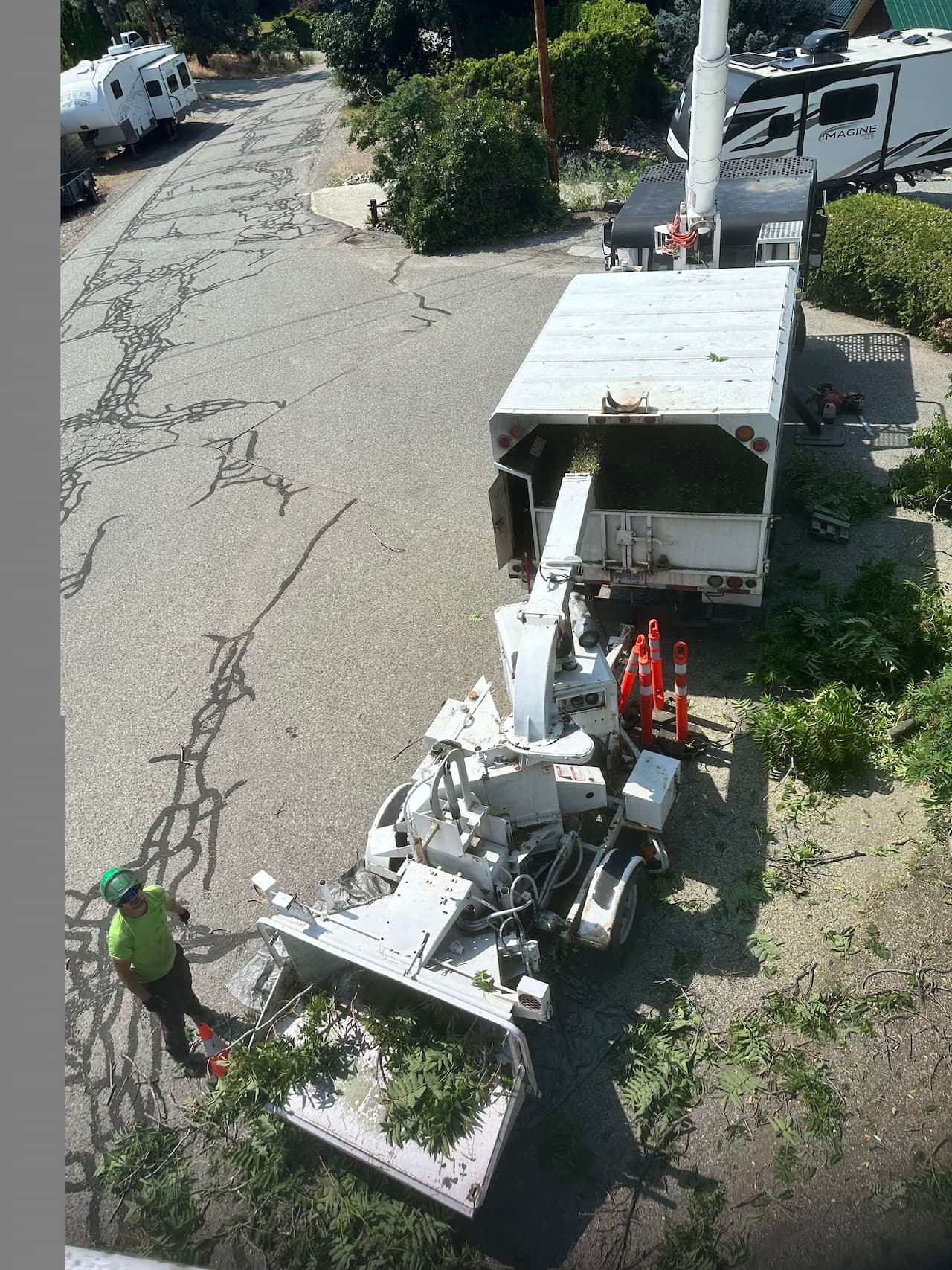
Modern arboriculture is a blend of physics, botany, and logistics. Crews carry top-handled saws for https://israelkuvu831.cavandoragh.org/certified-arborist-consultation-for-new-homebuyers aloft work, ground saws with bars sized to the task, rigging blocks and slings rated for dynamic loads, helmets with face protection, and communication headsets so the entire team hears each call. For FireSmart Tree Services, we add water fire extinguishers, spark arrestors where mandated, and strict hot work shutdown protocols during red flag days. We stage equipment so that chips and sawdust do not drift into vents or under decks, and we use ground covers to protect soils and hardscapes.
Beware of bids that skip permits or propose topping. Topping creates dense, weak sprout growth and raises long-term risk. Demand pruning to recognized standards and a clear scope with cleanup plans that respect FireSmart principles, like removing grindings from the five meter zone.
A path forward that respects trees and risk
Trees cool cities, shelter birds, and lift mood, even on tense summer days tinged with smoke. We do not need to trade beauty for safety. With a clear-eyed plan, calibrated pruning, timely removals, and steady maintenance, your property can ride out embers and wind without surrendering its character.
Start with a Certified Arborist Consultation focused on FireSmart priorities. Use Tree Pruning & Crown Shaping to interrupt ladder fuels and protect rooflines. Where trees fail the test, bring in Dangerous Tree Assessment and Removal and follow up with Stump Removal & Grinding so old hazards do not hide underground. Consider Tree Cable and Bracing for valued specimens that need support, and keep Emergency Tree Services on your contact list for those nights when weather or fire puts a limb where it shouldn’t be.
The work pays you back in quieter summers, cleaner gutters, and a yard that welcomes both people and patrol trucks. That is the point of FireSmart Tree Services on rural lanes and urban blocks alike, making space for life while keeping flame at bay.
Ace Tree Services Ltd.
Name: Ace Tree Services Ltd.Address: 4656 Wallace Hill Road, Kelowna, BC
Postal code: V1W 4C2
Phone: 250-212-9593
Website: https://acetree.ca/
Hours:
Monday: 7:00 AM - 5:00 PM
Tuesday: 7:00 AM - 5:00 PM
Wednesday: 7:00 AM - 5:00 PM
Thursday: 7:00 AM - 5:00 PM
Friday: 7:00 AM - 5:00 PM
Saturday: 7:00 AM - 5:00 PM
Sunday: Closed
Open-location code (plus code): RHF8+8G Kelowna, British Columbia, Canada
Map/listing URL: https://www.google.com/maps/place/Ace+Tree+Services+Ltd./@49.8232606,-119.4337283,659m/data=!3m2!1e3!4b1!4m6!3m5!1s0x537d8b1d074815c5:0x450b88afa7a41435!8m2!3d49.8232606!4d-119.4337283!16s%2Fg%2F11ydkpnh22
Embed iframe:
"@context": "https://schema.org", "@type": "HomeAndConstructionBusiness", "name": "Ace Tree Services Ltd.", "url": "https://acetree.ca/", "telephone": "250-212-9593", "address": "@type": "PostalAddress", "streetAddress": "4656 Wallace Hill Road", "addressLocality": "Kelowna", "addressRegion": "BC", "addressCountry": "CA" , "openingHoursSpecification": [ "@type": "OpeningHoursSpecification", "dayOfWeek": "https://schema.org/Monday", "opens": "07:00", "closes": "17:00" , "@type": "OpeningHoursSpecification", "dayOfWeek": "https://schema.org/Tuesday", "opens": "07:00", "closes": "17:00" , "@type": "OpeningHoursSpecification", "dayOfWeek": "https://schema.org/Wednesday", "opens": "07:00", "closes": "17:00" , "@type": "OpeningHoursSpecification", "dayOfWeek": "https://schema.org/Thursday", "opens": "07:00", "closes": "17:00" , "@type": "OpeningHoursSpecification", "dayOfWeek": "https://schema.org/Friday", "opens": "07:00", "closes": "17:00" ], "geo": "@type": "GeoCoordinates", "latitude": 49.8232606, "longitude": -119.4337283 , "hasMap": "https://www.google.com/maps/place/Ace+Tree+Services+Ltd./@49.8232606,-119.4337283,659m/data=!3m2!1e3!4b1!4m6!3m5!1s0x537d8b1d074815c5:0x450b88afa7a41435!8m2!3d49.8232606!4d-119.4337283!16s%2Fg%2F11ydkpnh22"
Ace Tree Services Ltd. provides professional tree removal, pruning, stump grinding, emergency response, and arborist consultations for properties in Kelowna and across the Okanagan Valley.
The company works with homes, commercial properties, and municipal settings where tree work needs to be planned carefully around buildings, fences, driveways, landscaping, and other site constraints.
Based in Kelowna, the team is positioned to help nearby neighbourhoods and surrounding Okanagan communities with routine tree care and time-sensitive storm cleanup.
Customers looking for careful tree work often want a crew with certified arborist training, insurance, and a methodical approach to higher-risk removals.
Services also include dangerous tree assessment, cabling and bracing, and wildfire risk reduction tree work for properties that need longer-term planning.
To request a quote or discuss tree care options, call 250-212-9593 or visit https://acetree.ca/.
A public map listing is available to help customers confirm the business location and get directions before a site visit or estimate.
For Kelowna property owners who need pruning, removals, or emergency tree help, a local tree service can make it easier to schedule site-specific recommendations and cleanup.
Popular Questions About Ace Tree Services Ltd.
What services does Ace Tree Services Ltd. provide?Ace Tree Services Ltd. lists tree removal, stump removal and grinding, tree pruning and crown shaping, emergency tree service, arborist consultation, dangerous tree assessment and removal, cabling and bracing, and wildfire risk reduction tree work.
Who does Ace Tree Services Ltd. serve?
The company describes its work as serving homes, businesses, and municipalities in Kelowna and across the Okanagan Valley.
Is emergency tree help available?
Yes. Emergency service is listed for downed or uprooted trees, dangerous tree assessment, stabilization work, and branch cleanup. If a tree is near power lines, the safest first step is to stay clear and contact the utility provider before any tree work begins.
Do I always need a permit to remove a tree?
Not always. Permit requirements can depend on where the tree is located and whether it is near a creek, lake, steep slope, or another protected area. It is best to check local rules for the specific property before removal work starts.
How deep does stump grinding usually go?
Standard stump grinding is typically described as going about 6 to 12 inches below ground level, which is often enough for grass or surface landscaping. Deeper grinding may be possible when site plans call for it.
How much of a tree can be safely removed at one time?
That depends on the species, age, health, and structure of the tree. In practice, good pruning is usually about removing the right limbs for health, clearance, and structure rather than chasing a fixed percentage.
What are common signs that a tree may be dangerous?
Large dead limbs, visible cracks, a new lean, root damage, canopy dieback, or storm-related damage can all be warning signs. Trees near structures deserve extra attention when any of those issues appear.
What is cabling and bracing in tree care?
Cabling and bracing are support systems used to reduce the risk of failure in trees with structural weaknesses that may still be worth preserving. They are generally used to add support, not to replace good assessment and ongoing maintenance.
How do I contact Ace Tree Services Ltd.?
Call 250-212-9593.Website: https://acetree.ca/.
Landmarks Near Kelowna, BC
Downtown KelownaThe downtown core is a practical reference point for lakefront neighbourhoods, mixed-use streets, and central residential properties. If your property is near downtown, tree pruning, removals, and cleanup can be planned around tighter access and nearby structures.
Knox Mountain Park
This well-known park north of downtown is a recognizable landmark for nearby homes and hillside properties. If you are close to this area, ask about tree assessment, trimming, or removal work suited to sloped sites.
Mission Creek Greenway
The greenway runs through several parts of Kelowna and is a useful landmark for nearby residential areas. If your property borders or sits near this corridor, site-specific tree planning is especially important.
Pandosy Village
Pandosy is one of Kelowna’s most recognizable neighbourhoods and a common reference point for south-central properties. If you are nearby, request help for pruning, removals, or storm cleanup around homes and small commercial sites.
Rutland
Rutland is a major east Kelowna neighbourhood with a mix of residential and local commercial properties. If you are located in or near Rutland, tree work can be scheduled for both routine maintenance and urgent situations.
Landmark District
This central business-focused area is a practical landmark for offices, service properties, and nearby residential streets. If your site is near the district, ask about careful tree work around parking, access lanes, and built-up lots.
Kelowna’s North End
The North End sits on the edge of downtown and is a useful reference for nearby homes, industrial sites, and commercial properties. If you are in this part of the city, request tree care based on the layout and constraints of the lot.
Airport District
The Airport District is a recognizable north Kelowna reference point for surrounding properties and access routes. If you are in this area, ask about tree services for residential acreage, commercial sites, or roadside cleanup needs.
Glenmore & Dilworth
These established Kelowna neighbourhoods are useful landmarks for central and north-central service calls. If your property is nearby, pruning and removal work can be tailored to mature trees and established landscapes.
Highway 97 Corridor
Highway 97 is one of the city’s main travel routes and a common way to describe location within Kelowna. If your home or property is just off the corridor, a clear landmark reference can help speed up quote scheduling and site planning.